
We Speak Truth

Get The Facts.

Industry documents

More important documents, including the WPATH Files — leaked documents and videos from trans health professionals.

In order: the leaked WPATH Files, the CMS Medicaid/CHIP final rule, HHS’s Wolves in White Coats report, the American Society of Plastic Surgeons February 2026 surgery position, and Finland’s 2026 nationwide register study on psychiatric illness after gender-clinic referral. They sit here so they are not mistaken for evidence reviews. A 2026 news story on hospital billing codes for “remission” and stopping transition is a News story, not an industry document.

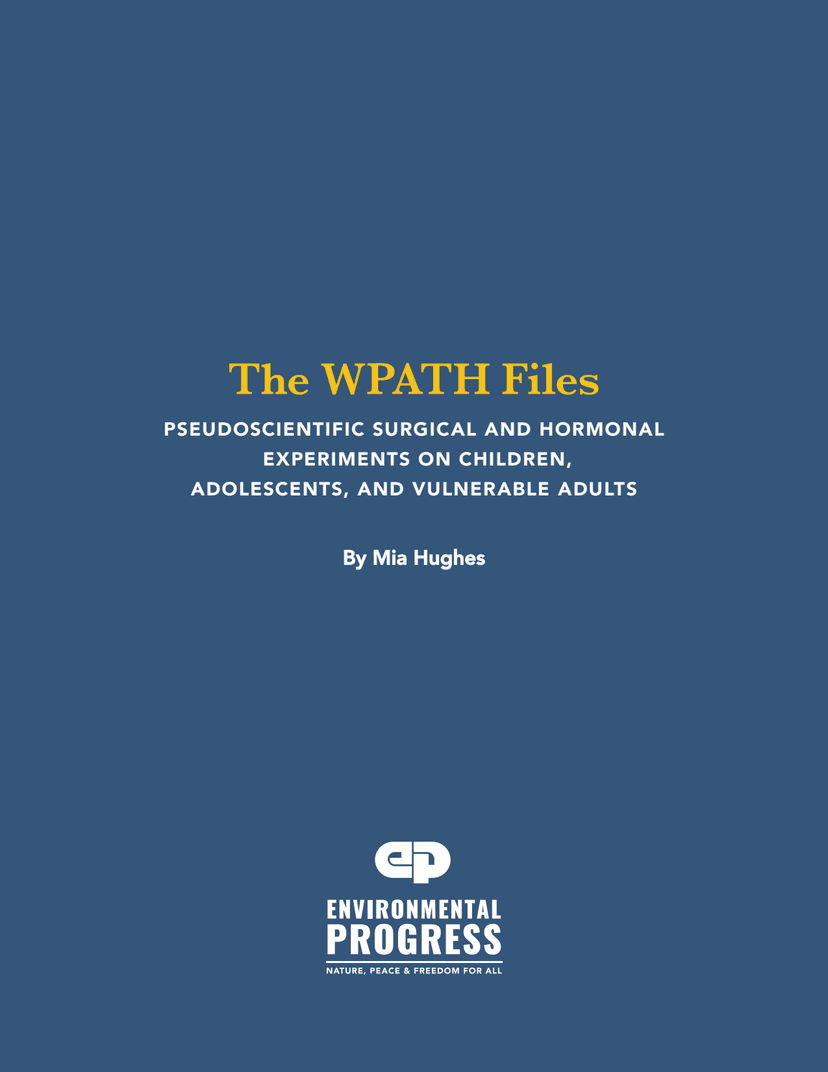
The WPATH Files cover

The WPATH Files: Pseudoscientific Surgical & Hormonal Experiments on Children

Leaked files from the main gender-clinic lobby (WPATH) show clinicians discussing serious problems with the ethics and science of sex-rejecting procedures, including WPATH’s treatment rulebook (Standards of Care) that has shaped clinic policy worldwide.

  • Lack of informed consent: Clinicians acknowledging that some patients, including minors and those with severe mental health issues, are receiving irreversible treatments such as puberty blockers, hormones, and surgeries despite not being able to fully understand the consequences, such as infertility or loss of sexual function.
  • Awareness of harmful outcomes: WPATH members discuss serious side effects of treatments, including cancer, pelvic floor dysfunction, and sterility, yet often dismiss concerns about long-term patient outcomes, prioritizing access to interventions over caution.
  • Unscientific practices: The files reveal an improvisational approach to treatments, with clinicians discussing experimental procedures like “nullification” surgeries and acknowledging a lack of evidence for long-term outcomes, undermining WPATH’s claim of providing evidence-based care.
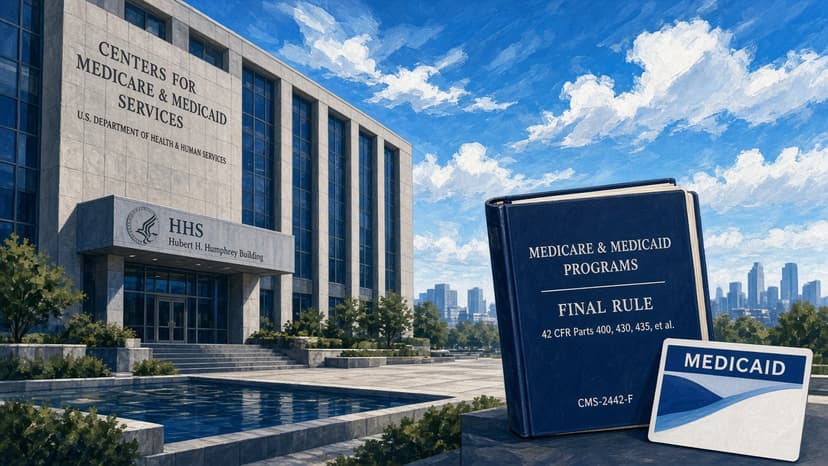
CMS Final Rule cover

CMS Final Rule: Federal Medicaid and CHIP funding ended for sex-rejecting procedures on children

The U.S. Department of Health and Human Services, through the Centers for Medicare & Medicaid Services, issued a final rule ending the use of federal Medicaid and children’s-insurance (CHIP) funds to pay for sex-rejecting procedures on children and youth. HHS describes those procedures as including puberty blockers, hormones of the opposite sex, and surgical operations.

  • The rule prohibits federal Medicaid dollars for sex-rejecting procedures for people under 18, and federal children’s-insurance (CHIP) dollars for people under 19 (CMS-2451-F).
  • HHS says the final rule is scheduled to take effect October 13, 2026.
  • Federal Medicaid and CHIP funding will be available for a tapering-off period of up to six months from the effective date for children currently on hormone therapy.
  • The rule does not affect coverage of mental health services. HHS states this action applies only to federal Medicaid and CHIP funding.
  • CMS says the decision follows HHS’s review of national and international research, including the United Kingdom’s Cass Report, that found significant evidence gaps and serious safety concerns.
Wolves in White Coats cover

Wolves in White Coats: How Doctors and Hospitals Pushed and Profited from the Fraud of “Gender Medicine”

A commissioned HHS report examining insurance coding practices, perverse financial incentives, and the provision of sex-rejecting procedures for minors. HHS draws on CMS guidance, Department of Justice investigations, peer-reviewed literature, hospital records, whistleblower testimony, nationwide insurance claims analyses, and interviews with patients and parents.

  • HHS reports that more than 225 hospitals and health systems established pediatric gender programs nationwide.
  • Nationwide claims data from 2015 through 2025 identified approximately $50 million in insurance claims for puberty blockers billed using endocrine disorder diagnostic code E34.9 (Endocrine Disorder, Unspecified).
  • The report further identifies nearly $11 million in claims for patients ages 13–17 billed using a diagnosis code for precocious puberty E301 — findings HHS says warrant additional review of insurance coding practices.
  • Vice President JD Vance, as Chairman of the White House Task Force to Eliminate Fraud, and Secretary Kennedy referred hospitals and clinics identified by the report to the Department of Justice and the HHS Office of Inspector General, respectively, for possible violations of federal law.
  • The report recommends that federal and state agencies review coding and billing practices and strengthen oversight of claims submitted to public health programs. Referral is not a finding of guilt.

February 3, 2026

American Society of Plastic Surgeons

Gender Surgery for Children and Adolescents (Feb 3, 2026)

American Society of Plastic Surgeons: Gender Surgery for Children and Adolescents (Feb 3, 2026)

ASPS advises surgeons to delay breast/chest, genital, and facial gender surgery until patients are at least 19. It cites insufficient evidence of a favorable risk–benefit ratio, low-certainty mental-health evidence, concerns about long-term harms, and irreversibility in a developmentally vulnerable population. This is professional guidance for members — not a legal ban or a clinical practice standard.

  • Issued February 3, 2026. The ASPS/PSF Board of Directors approved the position on January 23, 2026.
  • ASPS recommends that surgeons delay gender-related breast/chest, genital, and facial surgery until a patient is at least 19 years old.
  • The Society concludes there is insufficient evidence of a favorable risk–benefit ratio for that endocrine-and-surgical pathway in children and adolescents, citing low-certainty mental-health evidence, emerging long-term harm concerns, and the irreversible nature of surgery.
  • The document states it is not a clinical practice guideline, not a standard of medical care, and not legal advice. ASPS has not undertaken a formal guideline-development process.
Finland register study — Ruuska et al. 2026 cover

Finland register study — Ruuska et al. 2026: Psychiatric illness after gender-clinic referral

Finland followed every person under 23 who contacted a specialist gender clinic from 1996 to 2019 — 2,083 people — and compared them with 16,643 matched peers in official records. Serious psychiatric illness was already much more common before referral. It did not fade after hormones or surgery.

  • Before referral, about 46% already had serious psychiatric illness, versus about 15% of matched peers. Two or more years later it was about 62% versus about 15%.
  • People referred after 2010 had even greater psychiatric need than earlier cohorts.
  • Among those who received sex-rejecting hormones or surgery, psychiatric illness rose over follow-up — about 10% to 61% in feminising treatment, and about 22% to 55% in masculinising treatment.
  • After prior psychiatric treatment was counted, referred youth still had about three times the psychiatric-illness risk of female peers and about five times that of male peers.
  • The authors: psychiatric needs do not subside after medical transition.
Ask about our work