

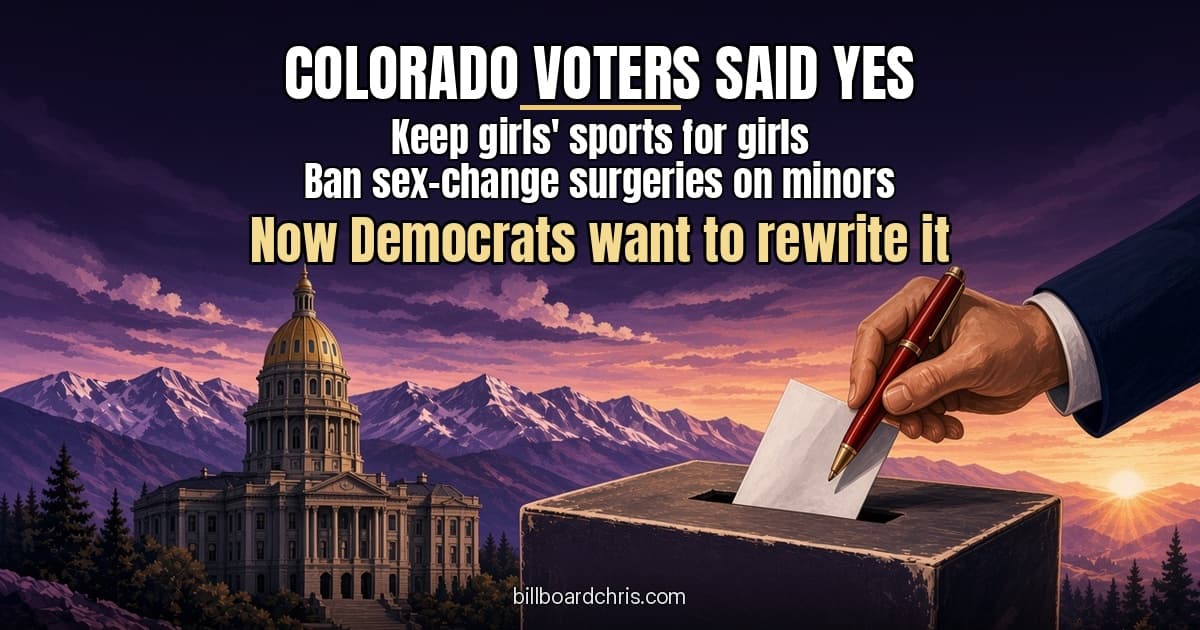
Colorado's next governor says two voter-backed ballot measures may need changes from the legislature. Voters passed both measures.
Gov.-elect Phil Weiser, a Democrat, spoke at a post-election news conference at the State Capitol in Denver on Wednesday, November 4. He said Proposition 134 and Proposition 135 will need "a long, hard look."
What the measures do
Proposition 134 requires school sports teams, from elementary school through college, to be labelled male, female, or coed. Students must play on the team that matches their sex, based on their biological reproductive system. Girls may join boys' teams when there is no girls' team.
Proposition 135 bars surgeries on people under 18 when the purpose is to change their sex characteristics. It also bars state and federal funding, Medicaid, and insurance from paying for those surgeries. The measure allows male circumcision and treatment for medically necessary developmental sex disorders and chemical abnormalities. It does not restrict nonsurgical services such as counseling.
The results
Both measures passed, with Proposition 134 at nearly 53% Yes and Proposition 135 at just over 52% Yes, according to The Denver Gazette. Protect Kids Colorado, the group behind the measures, declared victory on Wednesday evening.
What Weiser said
Weiser said officials would need to work "to understand the will of the voters," according to The Denver Post, as quoted by HotAir.
"It's important that we recognize that sometimes, something is passed and it is incomplete. It is not administrable," Weiser said. "Anytime you have a ballot measure that is statutory, it is a natural and, I believe, appropriate role for the legislature to say, 'What are the adjustments that need to be added?'"
On the sports measure, he said: "I don't believe it would be acceptable to Colorado to have every student athlete to have to go through full-body examinations or other invasions of privacy."
"We're going to have to take a long, hard look at what makes sense and make a range of decisions," Weiser said. "At this point, it's early for me to get into any specifics."
The Colorado Sun also quoted Weiser saying Democrats would "take a look at these anti-trans measures and what adjustments are necessary and appropriate." He did not name specific changes. Options range from minor alterations to full repeal, the Sun reported.
Proposition 134 does not require physical examinations. Colorado's Blue Book states that the measure "does not impose a specific method for determining or demonstrating biological sex" and that schools and districts must set their own verification procedures, Rocky Mountain Voice reported.
Democratic leaders discuss changes
Democrats will hold large majorities in both the state House and Senate when the new session begins. Both measures are statutory, so lawmakers can amend or repeal them with a simple majority.
State Rep. Jennifer Bacon, a Denver Democrat seeking to become House speaker, told The Colorado Sun she is working with opponents of the ballot measures on legislative next steps.
Senate President James Coleman, also a Denver Democrat, said he had not yet talked with the Senate Democratic caucus about the measures but expected those talks. "I don't think it's going to be a light decision," Coleman said, according to the Sun. He said lawmakers would have to balance the will of voters with the rights of people affected by the measures.
State Rep. Lorena García told 9NEWS that "nothing is off the table" as lawmakers weigh options with advocacy groups.
During the campaign, Weiser opposed both measures. Asked about them in an October Denver Gazette questionnaire, he answered "no on 134, no on 135." As Colorado's attorney general, he joined a lawsuit in September against a Trump administration rule that would stop states from using federal Medicaid money for "gender-affirming" drugs and procedures for low-income minors.
Weiser takes office in January. The measures take effect January 1, 2027, by their own terms. Lawmakers convene January 11.
Protect Kids Colorado responds
Erin Lee, who leads Protect Kids Colorado, rejected the idea that schools would need invasive exams. "No one is advocating for invasive examinations of children, nor have they occurred anywhere in the majority of states that already have this law," Lee told The Colorado Sun.
Lee accused Weiser of trying to "circumvent democracy" by framing a rewrite as a necessary administrative fix. "Weiser doesn't get to celebrate the will of the voters when it puts him in office and disregard that same will when it produces a result he doesn't like," she said in a text message to the Sun. "That's not respecting democracy. That's attempting to circumvent it."
"The people of Colorado have spoken, and they've sent a clear message to our elected leaders: when our legislature fails to represent us on these issues, We the People will come together and take action ourselves," Lee added.
In a statement to CBS Colorado, Protect Kids Colorado warned lawmakers against repeal. The group said legislators should expect fierce opposition and political accountability if they try to reverse the results, and that its legal team is prepared to pursue available legal avenues to defend the propositions.
Former state Sen. Kevin Lundberg, the group's chairman, said in a statement quoted by CBS Colorado: "For years, Colorado families asked their elected representatives to take these concerns seriously, only to see legislation repeatedly rejected at the Capitol. Yesterday, Coloradans spoke for themselves. They have made clear that the legislature's refusal to act did not reflect the will of the people."